
Dept. of Ecological Physiology & Biotechnology
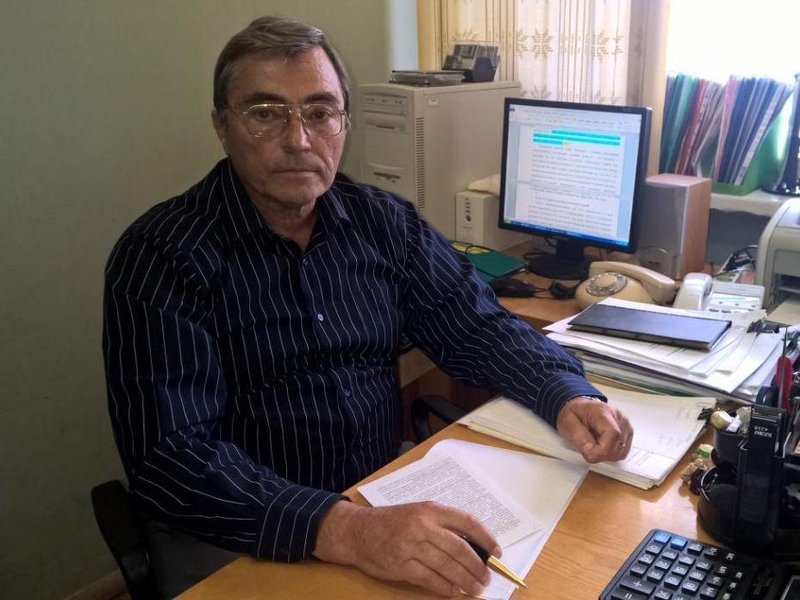
Acting Head of Department
Крот Юрій Григорович
пров.н.с., к.б.н., ст.н.с.
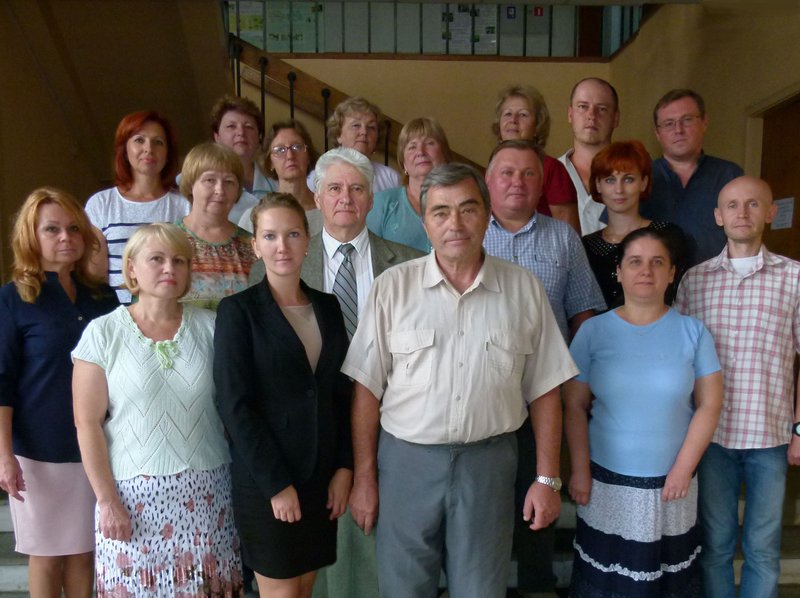
Staff of the Dept. of Ecological Physiology & Biotechnology
інж. І кат.
Левицька Оксана Вікторівна
інж. ІІ кат.
Євдашкіна Ольга Валеріївна
технік
Цвіла Олена Григорівна
інж. І кат. лабораторії
Черченко Костянтин Олександрович
Laboratory of Biologically Active Compounds
Research Directions
Fundamental Research:
- Study of the mechanisms of adaptation of aquatic organisms to changes in ecological factors (abiotic, biotic, anthropogenic) at the cellular, tissue, organismal, and population levels.
- Elucidation of the ecological potential, processes of plasticity formation, mobilisation of protective functions, metabolic changes, and reproductive capacity of aquatic organisms when cultivated under artificial conditions.
- Development of the theoretical foundations and technical principles for managing the growth, development, and reproduction processes of aquatic organisms (algae, higher aquatic plants, invertebrates, fish) in controlled systems.
Applied Research:
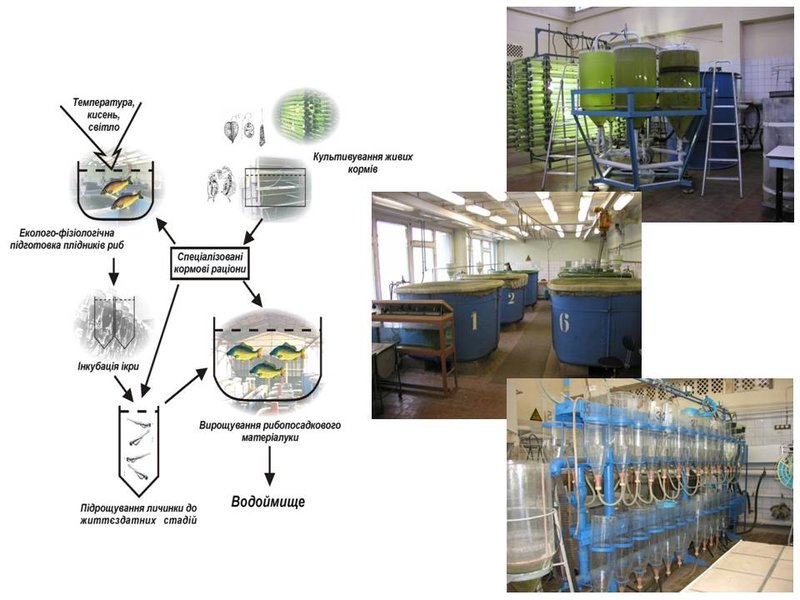
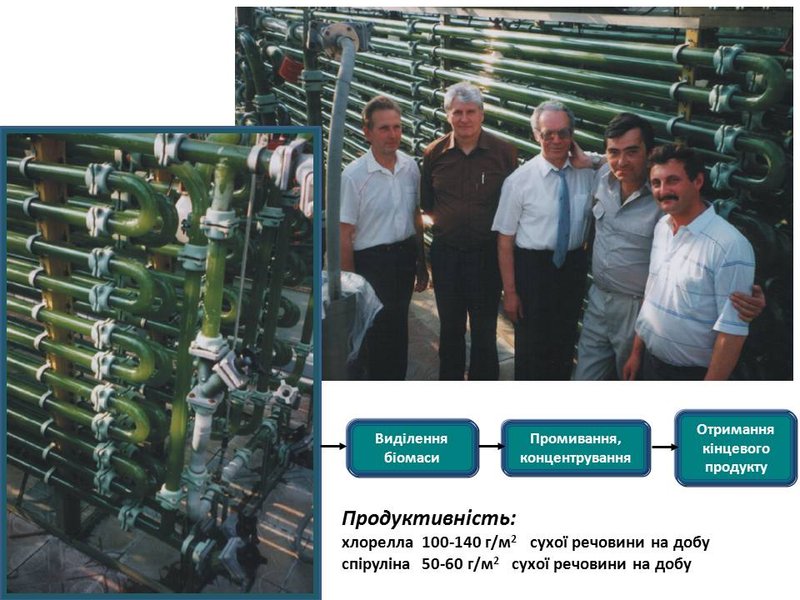
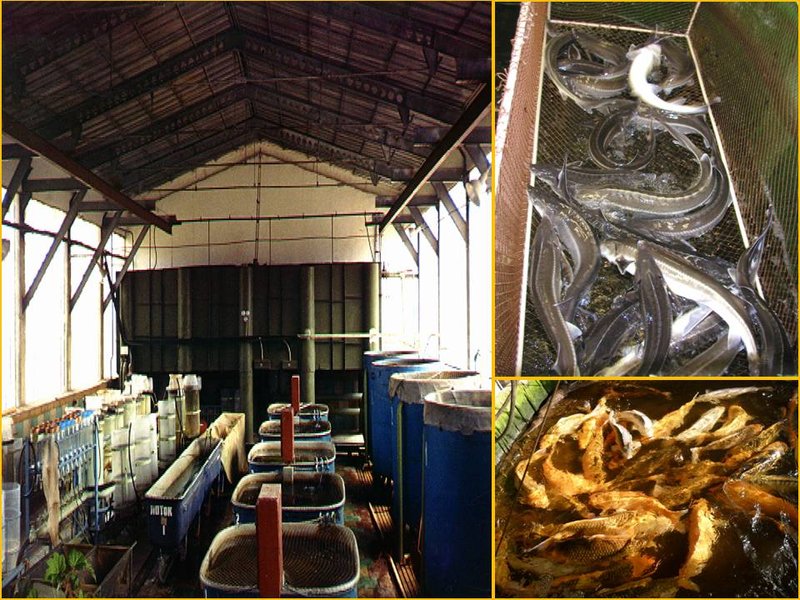
- Development of biotechnologies for year-round polycyclic cultivation of aquatic organisms at various trophic levels, production of biologically active compounds, and food, feed, and technical products.
- Development of methodological approaches to the creation of microcosms as an effective tool for assessing the stability and predicting the state of aquaculture systems.
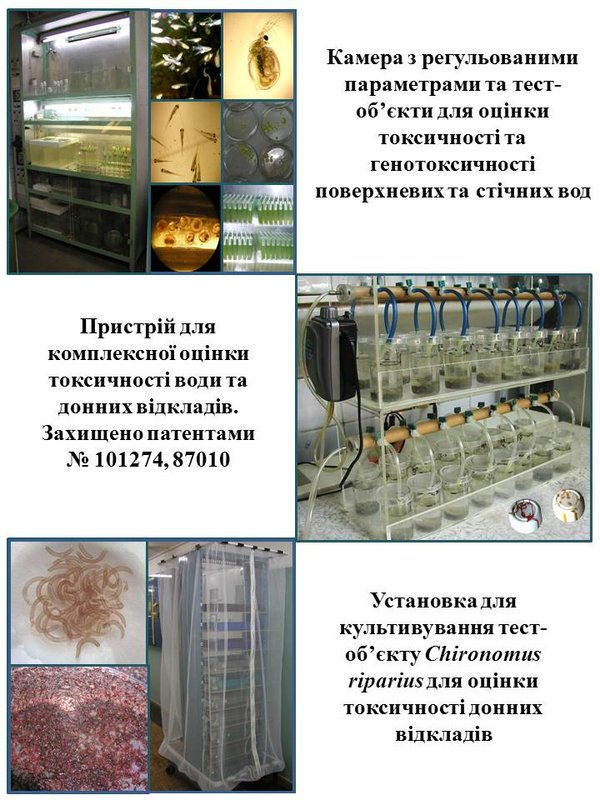
- Development of methods and systems for assessing the toxicity and genotoxicity (mutagenicity) of the habitat of aquatic organisms (water, sediments), xenobiotic substances, agricultural preparations, wastewater, etc.
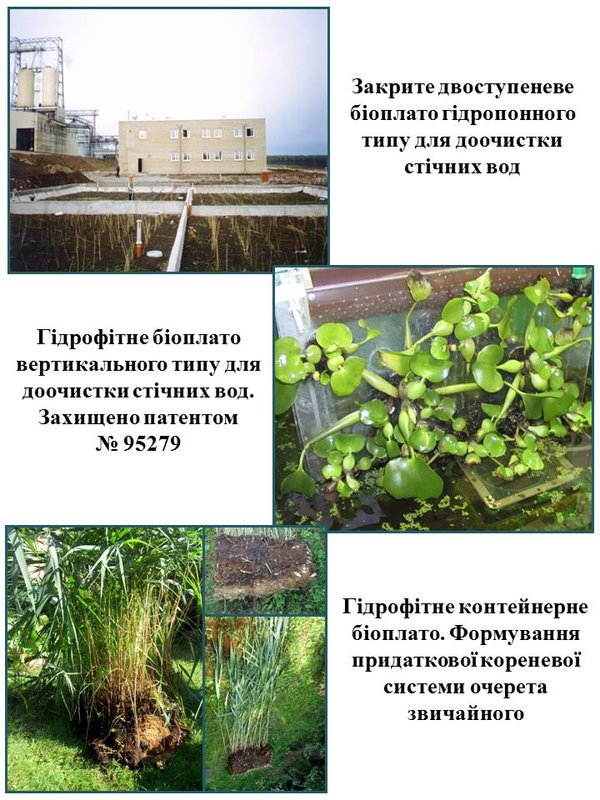
- Development of biotechnologies for restoring the quality of the aquatic environment and sediments using aquatic organisms at various trophic levels.
Results
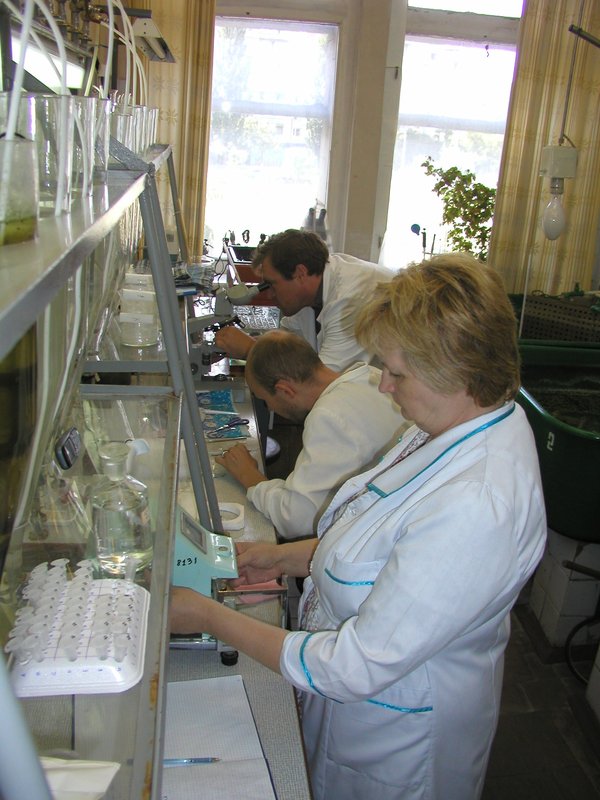
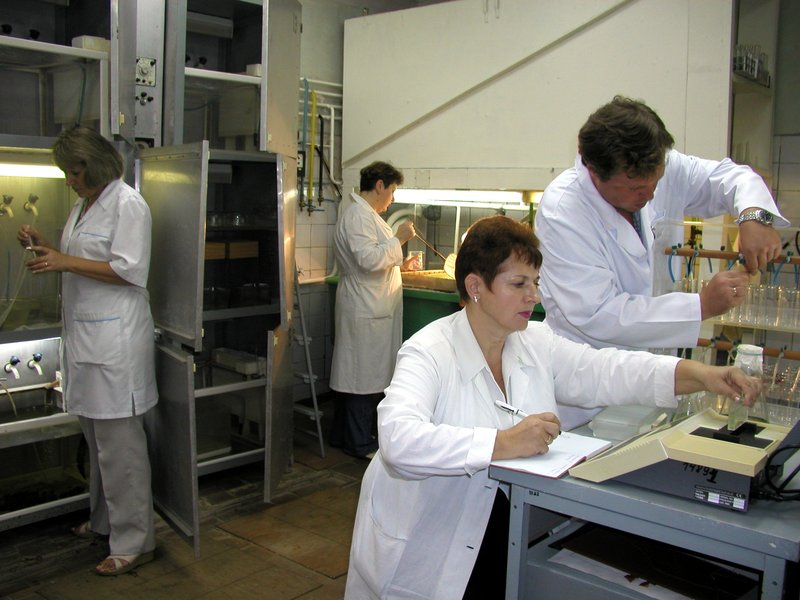
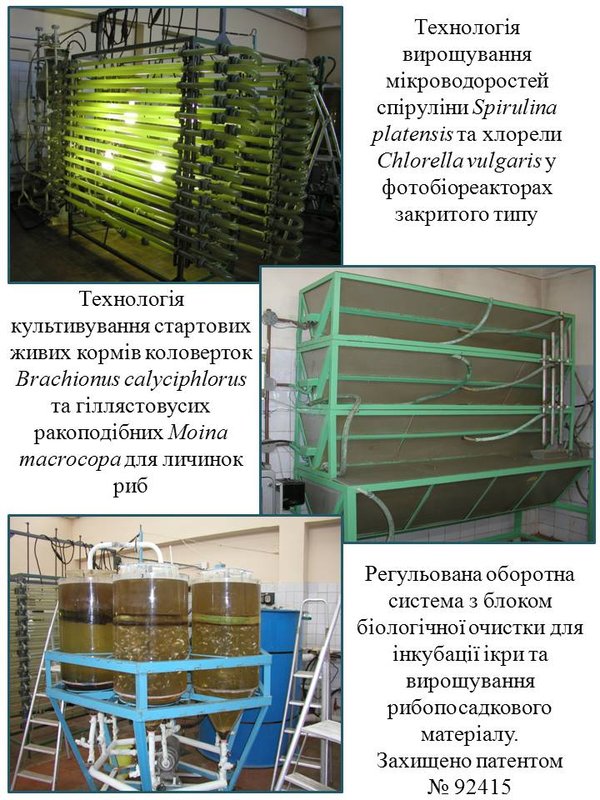
The department's research team has extensive experience conducting scientific work on the study of eco-physiological adaptation processes of aquatic organisms to changes in ecological factors. The department possesses biotechnologies for polycyclic year-round cultivation of aquatic organisms at various trophic levels, as well as methodology for developing hydrophytic engineering structures and managing their functioning, and for creating model ecosystems (microcosms). A comprehensive approach that takes into account the international ISO 14000 series of environmental standards is used in developing hydrobiotechnologies.
Field and experimental studies have shown that adaptive reactions in aquatic organisms to ecological factors arise at the physiological-biochemical and cytogenetic levels and alter their growth, development, and reproductive strategies. The realisation of the ecological potential of aquatic organisms is achieved through directed influence on their metabolic processes.
Critical levels of ecological factor impact in model ecosystems and their effects on aquatic organisms have been established, which is of paramount importance for comprehensive predictive assessment of aquaculture system functioning.
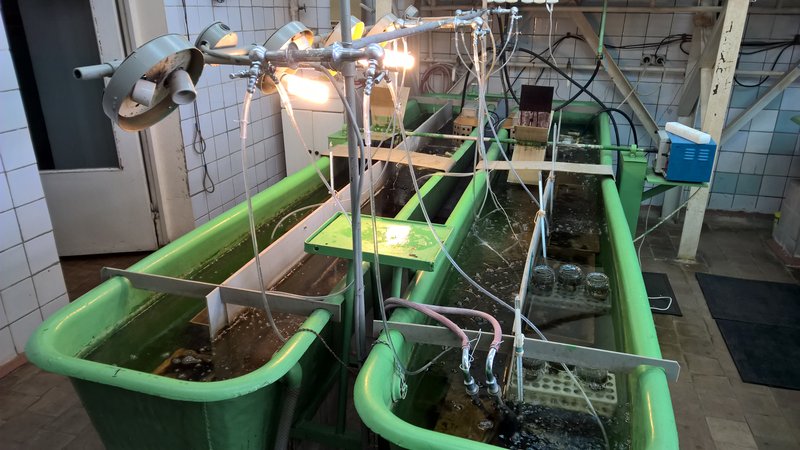
The fundamental physiological-biochemical and cytogenetic research conducted in the department formed the basis for developing a fundamentally new technological scheme for year-round polycyclic reproduction and cultivation of aquatic organisms at various trophic levels (microalgae, invertebrates, fish) in regulated systems, which was first implemented in Ukraine at the Vinnytsia RMS and Ladyzhynska TES. The accumulated scientific-practical results also formed the foundation for developing aquaponics systems, which are globally considered promising for producing organic food products.
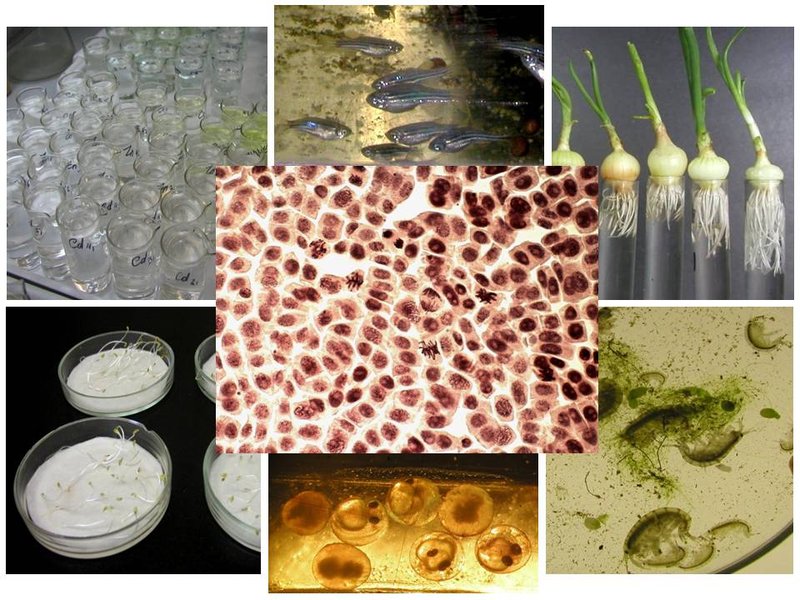
The developed cultivation technologies for aquatic organisms of various taxonomic groups and modern methodological approaches have enabled their application for assessing the toxicity and genotoxicity of water, suspended matter, sediments, solid waste, etc.
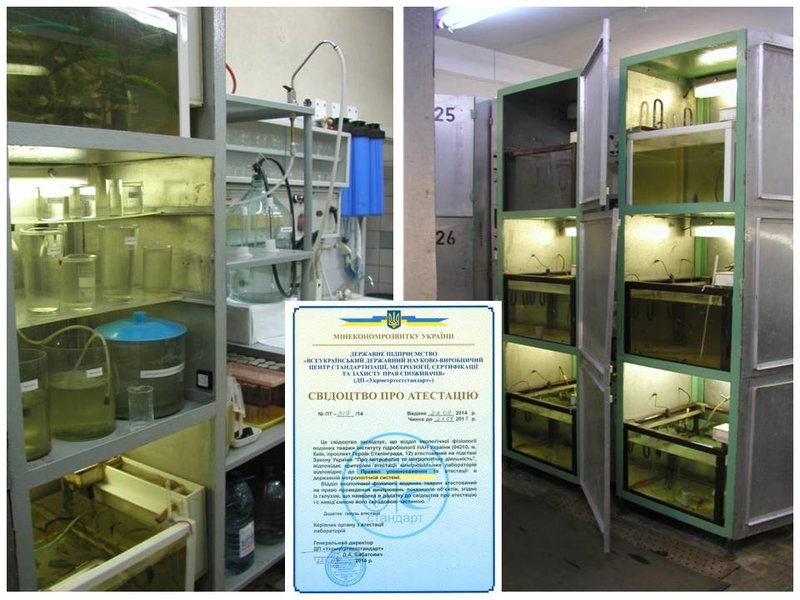
A bank of highly sensitive cultures of aquatic organisms at various trophic levels (microalgae, higher aquatic plants, invertebrates, fish) has been established at the biotechnological complex. This formed the basis for developing a comprehensive method for assessing sediment and water toxicity. The methodological base is protected by numerous patents. The department holds a "Certificate of Attestation" in the state metrological system for the right to carry out measurements of water quality indicators in water bodies and watercourses.
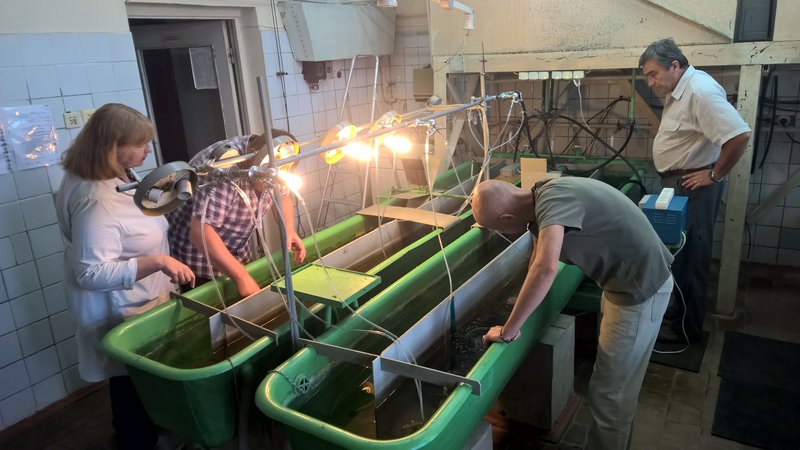
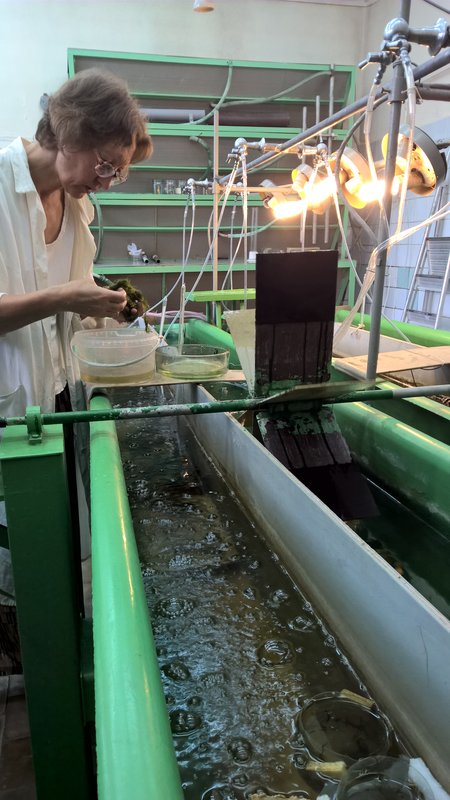
Various hydrophytic engineering structures ("bioplateau") are being developed at the department for restoring the quality of natural and wastewater, capable of effectively purifying and conditioning polluted return waters. Studies of hydrophytic engineering structures implemented in production (Cargill sunflower seed processing plant) demonstrated their effectiveness in restoring the quality of polluted waters.
Illustrations
Selected Publications
Monographs:
- Романенко В.Д., Крот Ю.Г., Киризій Т.Я. та ін. Природні і штучні біоплато (фундаментальні і прикладні аспекти). – Київ: Наук. думка, 2012. – 112 с.
- Гончарова М.Т., Кіпніс Л.С., Коновець І.М., Крот Ю.Г. Оцінка токсичності донних відкладів прісноводних об'єктів за допомогою біотестування. Методичні рекомендації. – Київ, 2019. – 131 с.
- Романенко О.В., Арсан О.М., Кіпніс Л.С., Ситник Ю.М. Екологічні проблеми Київських водойм та прилеглих територій. – К.: Наукова думка, 2015. – 190 с.
- Романенко В.Д., Крот Ю.Г., Сиренко Л.А., Соломатіна В.Д. Биотехнология культивирования гидробионтов. – К.: Наук. думка, 1999. – 264 с.
- Кирпенко Н.І. Аллелопатическое взаимовлияние пресноводных водоростей. – К.: Наук. думка, 2013. – 253 с.
- Сакевич О.Й., Усенко О.М. Алелопатія в гідроекосистемах. – Київ: Логос, 2008. – 344 с.
- Усенко О.М., Сакевич О.Й., Баланда О.В. Резистентність водоростей до біологічно активних речовин. – Київ: Логос, 2010. – 192 с.
Articles:
- Romanenko V.D., Krot Yu.G. Biotechnological researches in the Institute of hydrobiology of National academy of sciences of Ukraine // Hydrob. J. – 2015. – V. 51, №4. – P. 21–30.
- Burgess R.M., Konovets I.M., Kipnis L.S. et al. Distribution, magnitude and characterization of the toxicity of Ukrainian estuarine sediments // Mar Pollut Bull. – 2011. – 62(11). – P. 2442–62.
- Goncharova M.T., Kipnis L.S., Konovets I.M., Nezbrytska I.M., Yarovyi M.M. Ecological assessment of water and sediments quality of the Opechen Lakes System (Kyiv) // Hydrobiol. J. – 2020, Vol. 4(56). – P. 71–83.
- Ho K.T., Konovets I.M., Terletskaya A.V. et al. Contaminants, mutagenicity and toxicity in the surface waters of Kyiv, Ukraine // Marine Pollution Bulletin. – 2020, Vol. 155.
- Kirpenko N.I., Usenko O.M. Influence of higher aquatic plants on microalgae (a review) // Hydrobiol. J. – 2013. – Vol. 49, N 2. – P. 57–74.
- Kirpenko N.I., Krot Yu.G., Usenko O.M. Surfacewater «blooming» – fundamental and application aspects // Hydrobiological Journal. – 2019. – Vol. 55, N 2. – P. 18–30.
- Kirpenko N.I., Krot Yu.G., Usenko O.M. Toxicological aspects of the surface water "blooms" (a review) // Hydrobiological Journal. – 2020. – 56(3). – P. 3–16.
- Kirpenko N.I., Usenko O.M., Musiy T.O., Gorbunova Z.N. Content of proteins, carbohydrates, and lipids in the cultures of green algae under different conditions of illumination // Hydrobiological Journal. – 2020. – 56(5). – P. 33–40.
- Konovets I., Goncharova M., Kipnis L., Mardarevich M. Natural mineral waters as a medium for the stock Daphnia magna cultures for bioassays // Hydrobiological Journal. – 2021. – 57(2). – P. 87–95.
- Krasiuk Yu. Effect of Elevated Temperature Oscillation on Enzymatic Activity and Energy Substances' Content in Gills of Mollusk Unio tumidus // Hydrobiological Journal. – 2018. – V. 5(54). – P. 49–55.
- Krot Yu.G., Medovnyk D.V., Prychepa M.V. Peculiarities of physiological adaptation in fishes of small rivers of the urbanized territories // Hydrobiological Journal. – 2019. – V. 1(55). – P. 50–57.
- Leontieva T.A., Kirpenko N.I. Chlorophyta growth rate on different cultivation media // International Journal on Algae. – 2020. – 22(1). – P. 69–76.
- Medovnyk D.V. Ecological-physiological features of native and invasive fish species in small rivers under different degree of transformation // Hydrobiological Journal. – 2019. – V. 4(55). – P. 63–74.
- Romanenko V.D., Goncharova M.T., Konovets I.M. et al. Method of complex assessment of the bottom sediments toxicity using benthic and planktonic organisms // Hydrob. J. – 2012. – V. 48, №2. – P. 30–39.
- Romanenko V.D., Goncharova M.T., Konovets I.M., Kipnis L.S. Morphophysiological and cytogenetic modifications in Chironomus riparius (Diptera: Chironomidae) under the impact of copper ions // Hydrob. J. – 2012. – V. 48, №6. – P. 86–94.
- Romanenko V.D., Krot Yu.G., Lekontseva T.I., Podrugina A.B. Resistance of gammarids Pontogammarus robustoides and Chaetogammarus ischnus (Crustacea: Amphipoda) to elevation of temperature of the aquatic medium // Hydrobiological Journal. – 2014. – V. 50, №3. – P. 55–63.
- Romanenko V.D., Medovnik D.V. Species Composition and Ecological Characteristics of the Fish Fauna of Small Rivers of Urban Territories // Hydrobiological Journal. – 2017. – V. 6(53). – P. 3–11.
- Romanenko V.D., Goncharova M.T., Konovets I.M., Kipnis L.S. Selection of mineral substrates by Chironomus riparius larvae // Hydrob. J. – 2017. – V. 53, №3. – P. 100–106.
- Romanenko V.D., Konovets I.M., Goncharova M.T. et al. Methodic approaches to identification of the toxic compounds class in the bottom sediments of the fresh water bodies // Hydrobiological Journal. – 2018. – V. 6(54). – P. 94–103.
- Romanenko V.D., Krot Yu.G. Ecological-physiological and biotechnological investigations of hydrobiologists of the National academy of sciences of Ukraine // Hydrobiological Journal. – 2019. – Vol. 55, N 5. – P. 65–71.
- Romanenko V.D., Krot Yu.G., Lekontseva T.I., Podrugina A.B. Peculiarities of phyto- and zooplankton structural organization at an extremely high content of inorganic compounds of nitrogen in the water // Hydrobiological Journal. – 2017. – Vol. 53, Iss. 5. – P. 3–14.
- Romanenko V.D., Krot Yu.G., Lekontseva T.I., Podrugina A.B. Peculiarities of adaptation of gammaridae of the reservoirs' littoral zone to water temperature increase // Hydrobiological Journal. – 2020. – Vol. 56, Iss. 3. – P. 3–12.
- Romanenko V.D., Kipnis L.S., Goncharova M.T., Konovets I.M., Podrugina A.B. Toxicoresistance of invasive gammaridae (Crustacea: Amphipoda) of the littoral zone of the Dnieper reservoirs to the heavy metal ions // Hydrob. J. – 2014. – V. 50, №2. – P. 51–57.
- Usenko O.M., Konovets I.N. Analysis of phenolcarbonic acids content in phytomass of higher aquatic plants // Hydrobiological Journal. – 2014. – Vol. 50, N 5. – P. 47–60.